
Weight loss that fits real life: food, movement and a plan you can keep
You do not need a perfect diet or a punishing routine. Start with a few realistic habits, then build a medical plan around your health and your life.
Editorial series date: February 6, 2026. Updated October 9, 2026; not a claim of earlier publication. AI-assisted education, not individually clinician-reviewed.
Start smaller than you think
A healthy weight-management plan should fit an ordinary Tuesday, not just a motivated first week. If your day includes a commute, school pickup and dinner with family, a plan that depends on elaborate cooking and daily gym sessions may not last. The goal is a repeatable pattern, not a test of willpower.
NIDDK describes healthy eating, physical activity and behavioral support as the foundation of weight management. Obesity is a chronic health condition, and needing medical support is not a personal failure. [1]
Keep the foods that connect you to home
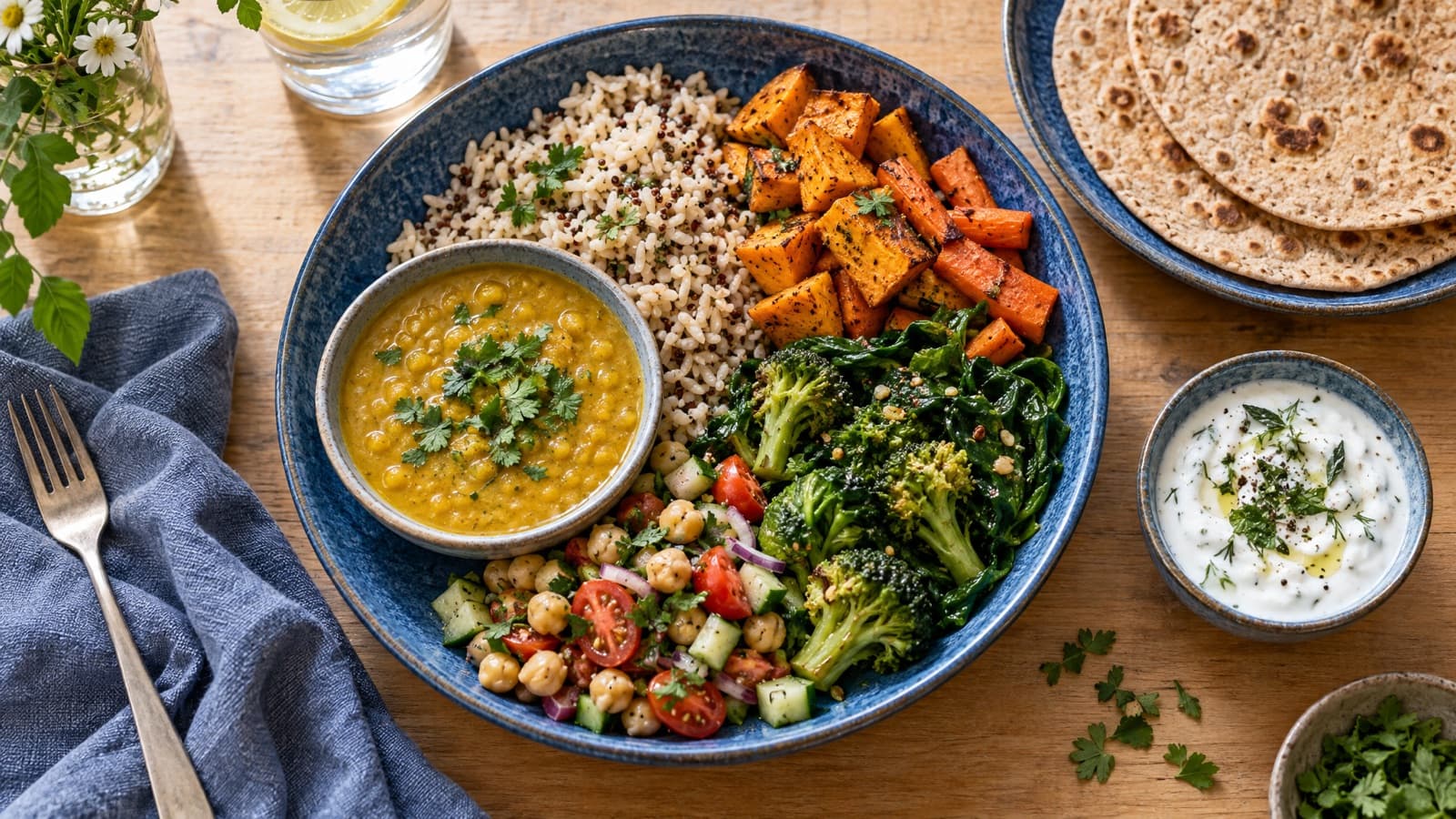
Rice, roti, dal and family meals do not have to disappear. Look at the balance of the meal: vegetables or fruit, a suitable protein source, fiber-rich foods and portions that work for you. Lentils, beans, tofu, yogurt, eggs or other proteins can be discussed according to preferences and health conditions. Kidney disease and other medical conditions can change nutritional advice.
A useful first step is noticing where meals become difficult. Are you skipping lunch and arriving home very hungry? Are drinks adding energy without helping you feel satisfied? Could a planned afternoon snack make dinner easier? A food record can reveal patterns without becoming a judgment of what you ate.
Move in ways you can repeat
A short walk after a meal, a park visit or an accessible home routine may be easier to sustain than an ambitious workout. CDC guidance for adults includes aerobic activity and muscle-strengthening work. Build toward suitable activity gradually, and adapt the plan for pain, mobility limitations and other conditions. More is not always better on the first day. [2]
Physical activity supports health even when the scale changes slowly. Improvements in stamina, strength, glucose management and daily function can matter alongside weight. New chest pressure, severe breathlessness or fainting should be evaluated urgently rather than pushed through.
Look beyond calories
Sleep disruption, stress, medicines and medical conditions can make weight management harder. That does not mean every person needs an extensive hormone panel. Tell your clinician about snoring, daytime sleepiness, medication changes or persistent symptoms so testing can answer a specific question.
Avoid detox products or supplements that promise effortless weight loss. A smaller number on the scale is not always a sign of better nutrition or health.
Make follow-up part of the plan
Choose a change you feel ready to try, decide what would make it easier and arrange a time to review progress. If the first approach does not help, adjust it rather than conclude that you have failed. Medication or other treatment may be appropriate after an individualized assessment. [1]
For adults looking for medical weight loss in Frisco or Plano, Tejas Clinic offers a conversation with Dr. Raman about lifestyle, treatment choices and costs. Bring your goals, current medicines and the practical barriers you face. Our only clinic is 12500 Lebanon Rd, Suite 102, Frisco, TX 75035. We welcome Plano patients at this Frisco address; text 469.469.8292 for staff to confirm an appointment.
An ordinary Indian or Asian family meal is a good place to start
You do not need separate “diet food” while everyone else eats dinner. Try talking through the meal your household already enjoys: dal or another suitable protein, sabzi or other vegetables, and rice or roti portions that fit your needs. If your usual meal is noodles or a rice bowl, the same conversation can include tofu, fish, eggs or chicken according to your preferences. Asian cuisines are diverse; no single plate represents every family.
For a busy week, choose one repeatable change—perhaps planning lunch instead of skipping it, or taking a comfortable family walk after dinner. Ask visiting parents what feels enjoyable and accessible. Our local healthy-living guide includes familiar-food ideas, protein guidance and direct park links. These are starting points for a personal plan, not a rule that everyone must lose weight.
Sources and editorial transparency
Editorial series date: 2026-02-06. Originally prepared October 6, 2026; updated October 9, 2026 with Asian/Indian-friendly practical guidance, food/protein context or local links. Original clinical content was not individually clinician-reviewed. Series dates organize this collection and do not claim earlier publication or evidence review. AI-assisted health education for Tejas Clinic; not individually clinician-reviewed or attributed to Dr. Raman. Linked sources describe the evidence and its limitations. This is not individualized medical advice. Illustrations are AI-generated and do not depict actual clinic patients or treatment outcomes.
This article is for educational purposes and does not replace individualized medical advice. Please discuss your personal situation with Dr. Raman at Tejas Clinic.