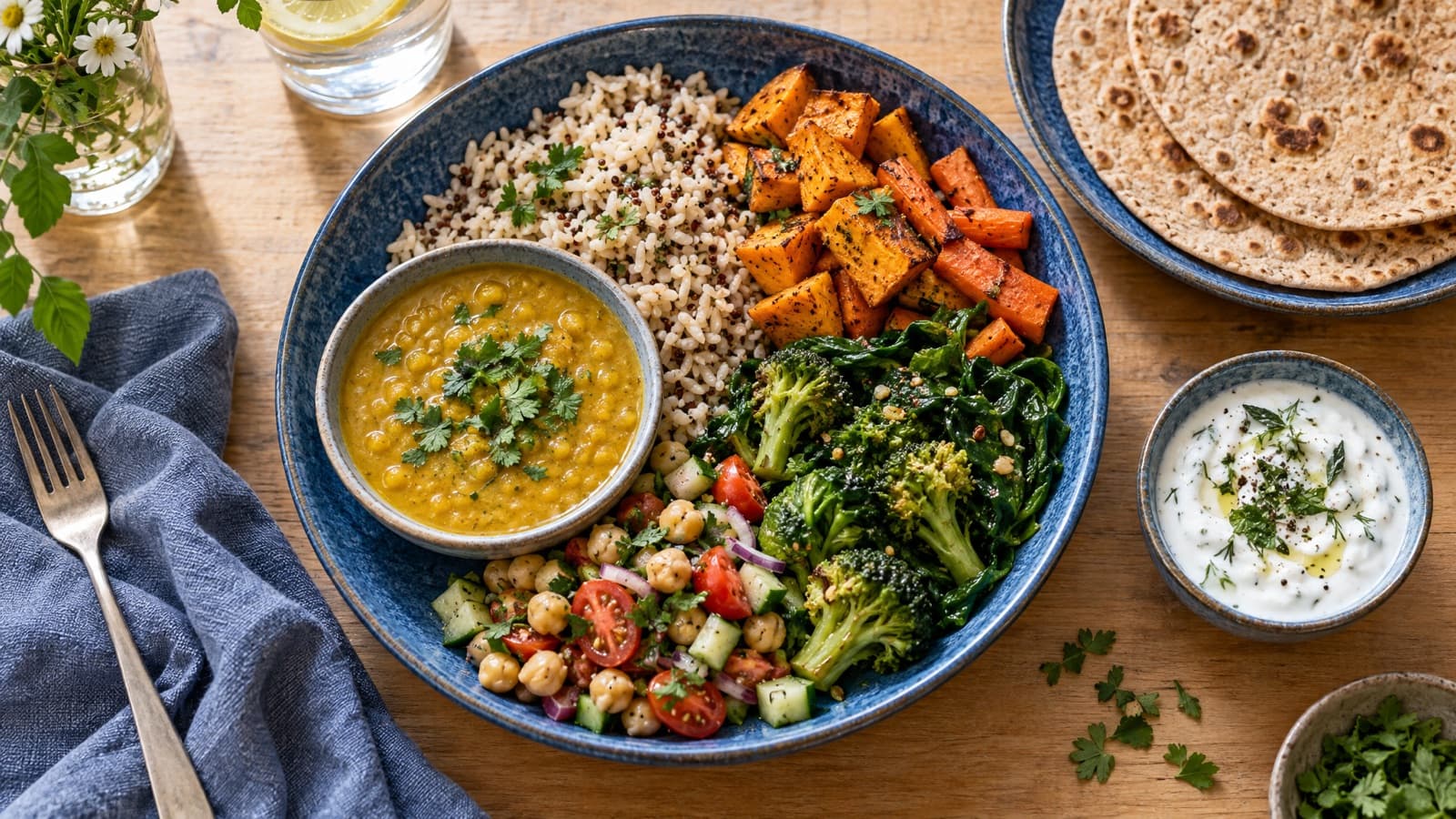
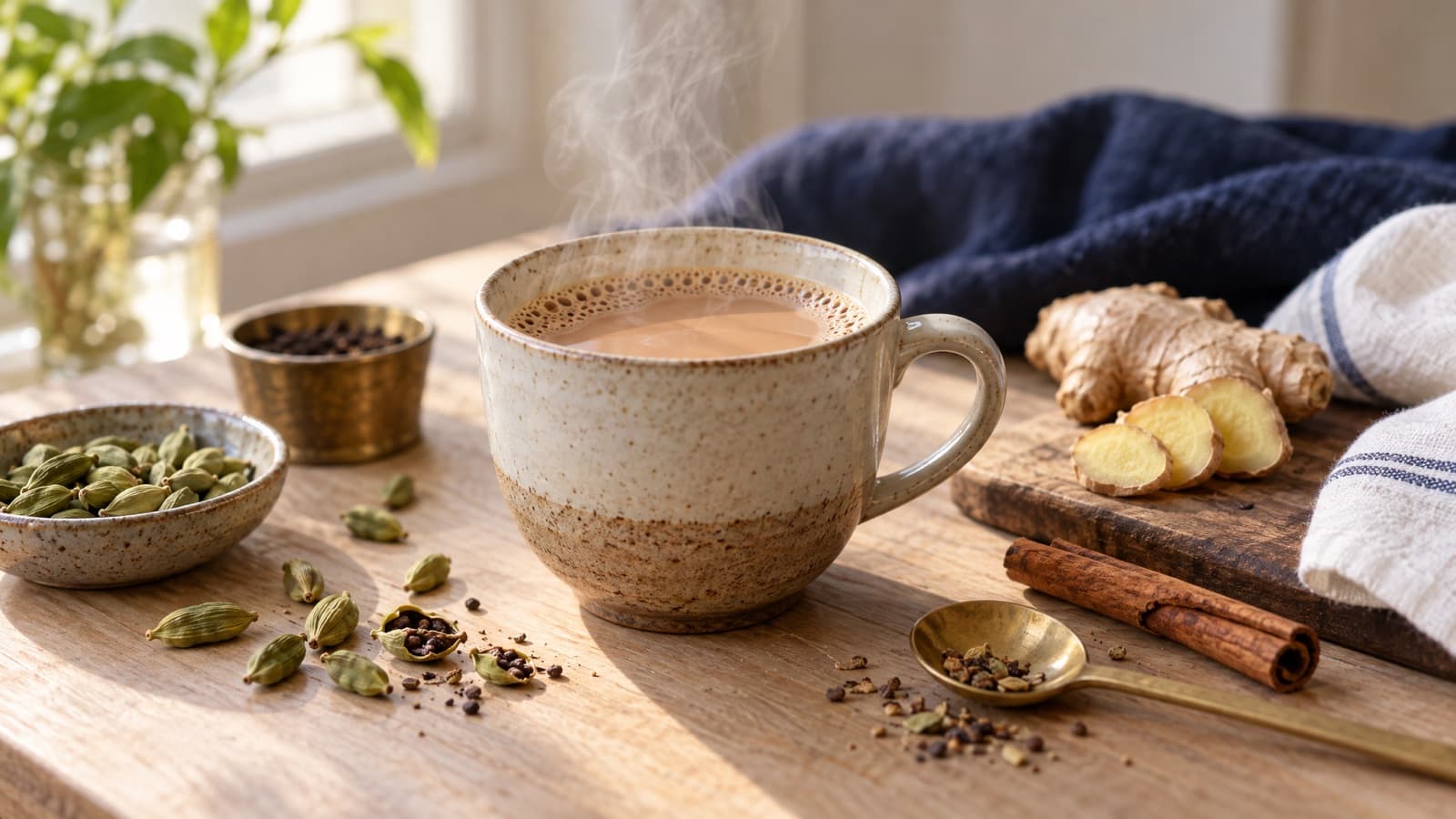
Your daily chai: what helps, what does not, and why
Chai can stay part of your day. Understand sugar, milk, caffeine, sleep, iron absorption and the difference between a comforting ritual and a health claim.
Editorial series date: October 13, 2026. Updated October 13, 2026; not a claim of earlier publication. AI-assisted education, not individually clinician-reviewed.
Keep the ritual; look at what is in the cup
A cup of chai can be a pleasant pause, a family connection and an enjoyable drink. The health question is not simply whether tea is good or bad. Consider the size of the cup, how much sugar is added, the milk used, how strongly it is brewed, when you drink it and what you eat alongside it.
Unsweetened or less-sweet chai can reduce added sugar compared with the same recipe made sweeter. That benefit comes from the change in the recipe—not from a special fat-burning effect. Tea contains plant compounds, but their presence does not prove that your cup prevents a heart attack, treats diabetes or cancels out a sugary meal. [1,3]
Sugar, jaggery and the biscuit beside it
Sugar, honey and jaggery all contribute sugars. Switching from white sugar to jaggery does not make chai sugar-free or automatically appropriate for diabetes. Reduce sweetness gradually if that helps the change last. Check premixed chai powders and concentrates, because sweetness may already be included before you add anything. [1,3]
The accompanying snack counts too. Several biscuits, rusks or fried snacks at every tea break can add more than expected. If you are hungry, consider an appropriate planned snack—such as a modest portion of nuts, roasted chana or plain yogurt—rather than repeatedly grazing. Portions, allergies and kidney-related restrictions still matter. No one snack is right for everyone.
Milk is a choice, not a detox problem
Milk can contribute protein and calcium; the amount in a small cup may be modest. Lower-fat milk may fit someone limiting saturated fat, while lactose-free milk or an unsweetened fortified alternative can suit other needs. Plant beverages differ substantially in protein and added sugar, so read the label rather than assuming they are equivalent.
We do not recommend removing milk on the promise that it will make tea prevent cancer or cleanse your body. Cardamom, ginger and cinnamon can add flavor and may help you enjoy less sweetness. Culinary spices are not substitutes for prescribed medicines; concentrated supplements are a different exposure and can have interactions.
Caffeine: count your whole day
Chai usually contains caffeine from tea leaves. MedlinePlus gives a general range of 14–60 mg for an 8-ounce cup of tea, but this is not a measurement of your homemade chai: leaf type, brewing strength and serving size vary. Coffee, energy drinks and some medicines add to the same daily total. [2]
MedlinePlus describes up to 400 mg a day as generally not harmful for most people, whereas ICMR–NIN advises limiting daily caffeine to 300 mg. These are different general references, not a personal target or permission to drink up to a limit despite symptoms. Pregnancy, breastfeeding, anxiety, sleep problems, heart rhythm concerns and medicines can require lower intake or individualized advice. [1,2]
If chai causes palpitations, shakiness, reflux or poor sleep, try a smaller or weaker serving and move it earlier. Decaffeinated tea may help, but is not necessarily caffeine-free. Cut back gradually if you are a regular caffeine user to reduce withdrawal headaches. Do not use caffeine to compensate for unsafe sleepiness while driving.
Timing matters when iron is low
Tea compounds can reduce absorption of iron from plant foods. ICMR–NIN advises avoiding tea around meals and separating it by at least an hour. This can be especially useful for someone with low ferritin, anemia or heavy periods who relies on plant-based iron. Follow your clinician's instructions for iron tablets rather than taking them with chai. [1]
Persistent fatigue should not be treated simply by adding stronger tea or ordering every vitamin test. Discuss symptoms and prior results with your clinician. Read the Indian meal guide, or request a visit to build a plan that keeps the habits you enjoy while addressing what needs to change.
Sources and editorial transparency
Editorial series date: 2026-10-13. Originally prepared October 13, 2026; sources checked October 13, 2026. Original clinical content was not individually clinician-reviewed. Series dates organize this collection and do not claim earlier publication or evidence review. AI-assisted health education for Tejas Clinic; not individually clinician-reviewed or attributed to Dr. Raman. Linked sources describe the evidence and its limitations. This is not individualized medical advice. Illustrations are AI-generated and do not depict actual clinic patients or treatment outcomes.
This article is for educational purposes and does not replace individualized medical advice. Please discuss your personal situation with Dr. Raman at Tejas Clinic.