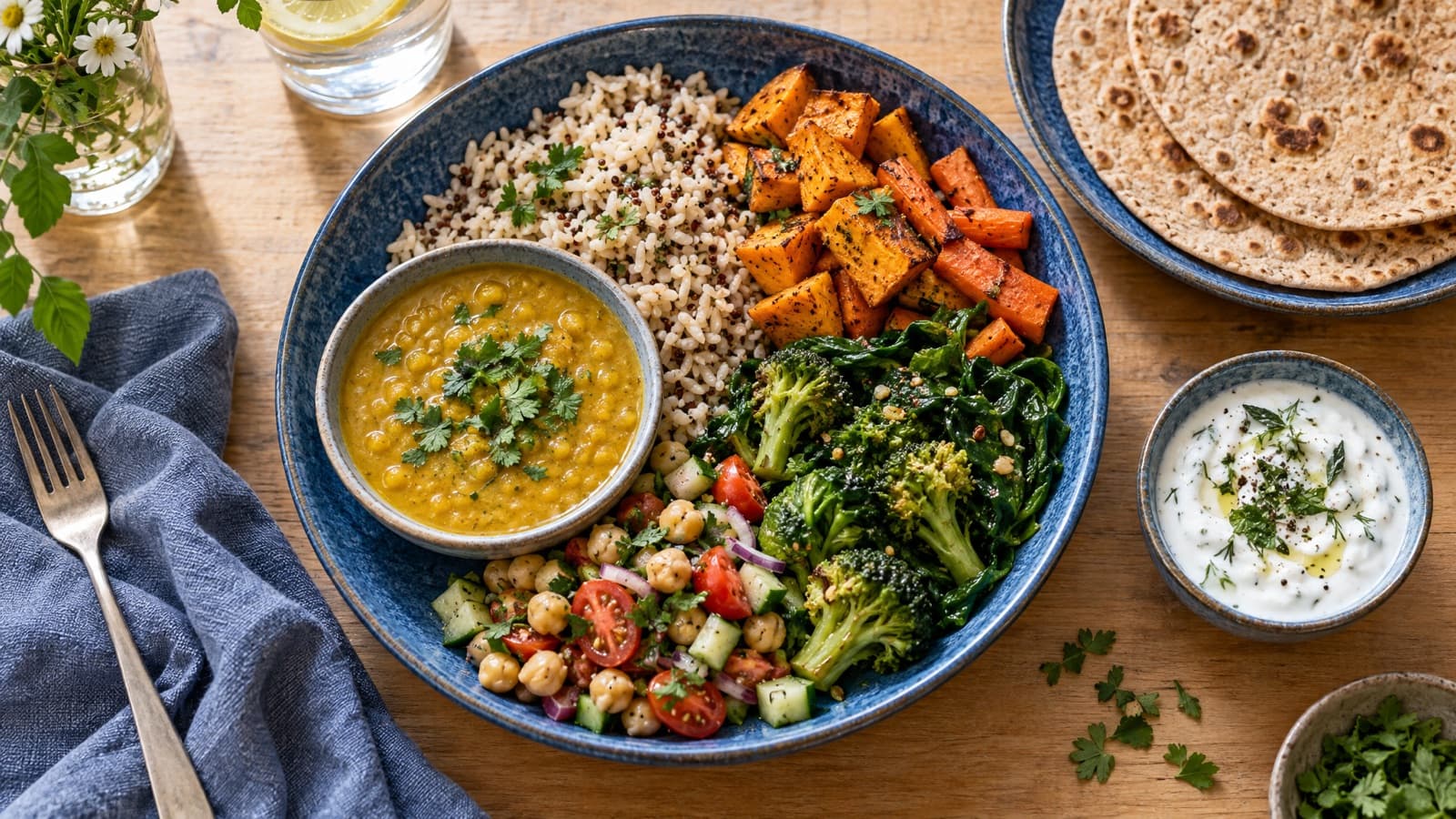
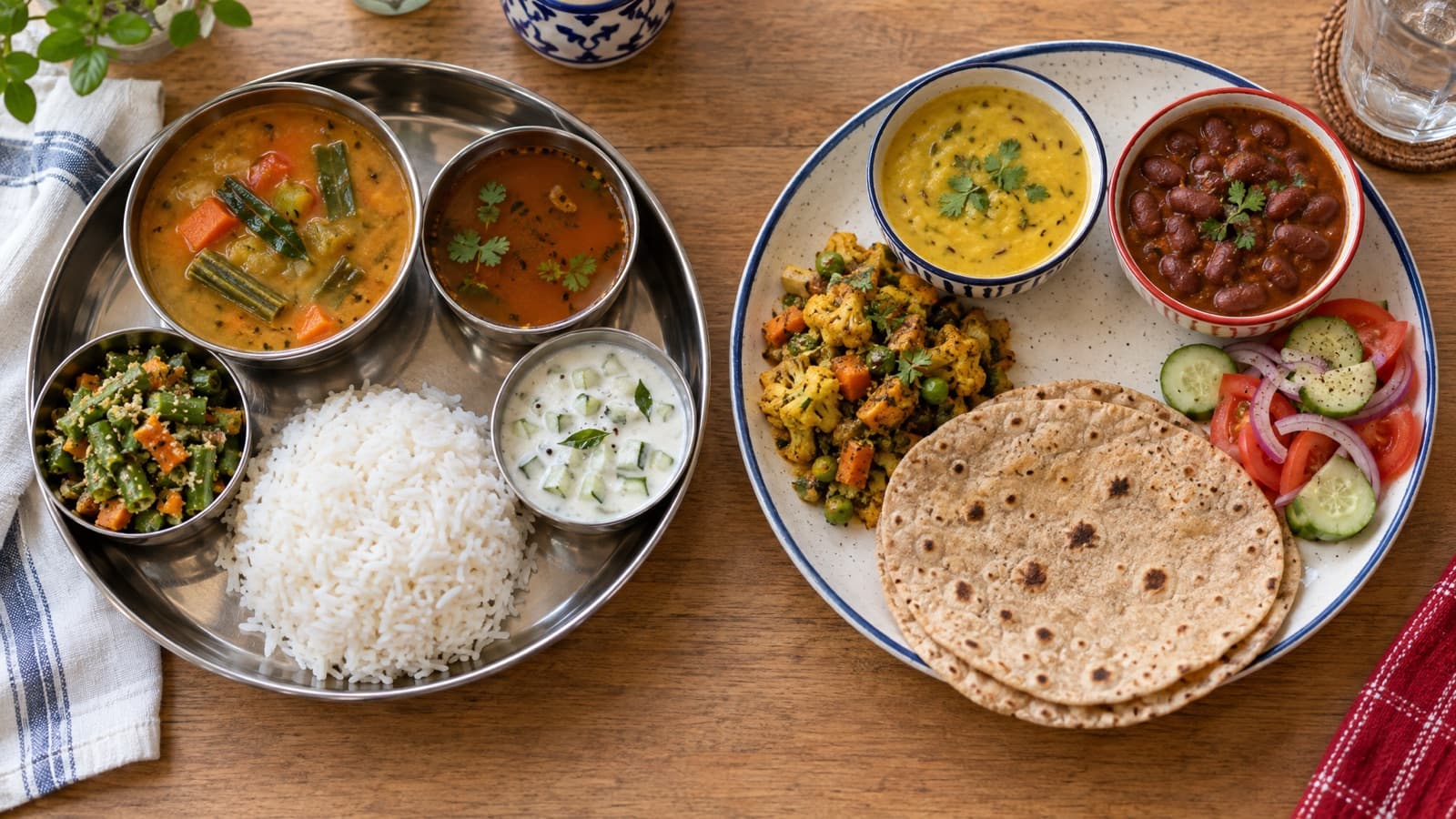
An Indian diet that fits you: South Indian and North Indian meal ideas
Keep idli, dosa, rice, roti and family favorites. Build balanced meals with practical South Indian and North Indian examples—not a restrictive one-size-fits-all menu.
Editorial series date: October 13, 2026. Updated October 13, 2026; not a claim of earlier publication. AI-assisted education, not individually clinician-reviewed.
Start with your household, not a diet label
There is no single Indian diet. Kerala, Tamil Nadu, Telangana, Andhra Pradesh, Karnataka and other regions have varied food traditions, just as Punjab, Gujarat, Rajasthan, Uttar Pradesh and other northern and western regions do. Religious preferences, vegetarian or nonvegetarian choices, budget and family routines add further differences. These examples are meal-building ideas, not prescriptions or a ranking of cuisines.
ICMR–NIN recommends varied foods, vegetables, pulses, appropriate whole grains and moderation in added sugar, salt and fats. NIDDK describes a plate approach that can help organize meals: roughly half nonstarchy vegetables, a quarter protein and a quarter suitable carbohydrate. Individual needs may differ, especially with kidney disease, pregnancy, undernutrition or glucose-lowering medication. [1,2]
South Indian breakfasts: look at the accompaniments
Idli with vegetable-rich sambar can be a useful base. Consider whether the meal needs a more substantial protein contribution, such as plain yogurt, an egg or additional lentils according to your preferences. Thin sambar with few lentils does not provide the same meal balance as a substantial dal-based serving.
Dosa does not need to be forbidden. The size, oil or ghee used, potato filling and side dishes change the overall meal. A smaller dosa with sambar and vegetables may suit someone better than a large restaurant dosa plus vada and a sweet drink. Pesarattu and adai can add pulses, but are not unlimited or automatically low-carbohydrate foods. Coconut chutney can fit in a modest portion; it need not dominate the plate.
South Indian lunches and dinners
Try a smaller portion of rice alongside dal, kootu or sambar, vegetables such as beans or okra, and a suitable protein. Fish, chicken, tofu, legumes, eggs or yogurt can fit different households. Rasam provides flavor but is not usually a replacement for a substantial protein serving. Curd rice can be accompanied by vegetables and additional protein rather than treated as a complete meal in every situation.
Millet rice, ragi preparations and brown rice may add variety and fiber, but portions still matter. Deep frying, large quantities of oil, salty pickles and repeated papad servings can change an otherwise balanced meal. You do not need to eliminate every traditional accompaniment; consider frequency and quantity.
North Indian meals: balance the thali
Whole-wheat roti with dal or rajma, a vegetable sabzi and salad can be a practical starting point. Chana, lentils and beans contribute both carbohydrate and protein, so consider the entire meal rather than counting them as unlimited protein. Add plain curd or another appropriate protein if needed. A plate with several rotis, a large rice serving and potatoes may benefit from swapping some of the starch for nonstarchy vegetables.
For paratha, consider a smaller portion, less added oil and a side of plain yogurt and vegetables. Tandoori or grilled options can be alternatives to deep-fried foods, while salt, marinades and serving size still matter. Paneer is not forbidden, but rich cream gravies and large portions add saturated fat and energy. Dal makhani and butter chicken can be occasional choices with a balanced rest of the meal rather than everyday nutritional benchmarks.
Make it practical in North Texas
Prepare a dal or bean dish and a vegetable dish ahead of time. Frozen vegetables and no-added-salt canned beans can reduce effort; check labels. At restaurants, ask for sauce or butter separately where possible, share large portions and choose water or an unsweetened drink. Requests are not guarantees of preparation or allergen safety.
A registered dietitian can help adapt protein, carbohydrate, potassium or sodium to your condition. Do not stop medication, skip meals while using insulin, or fast aggressively because of an online menu. Explore practical questions for eating out and our chai guide. The goal is a sustainable Indian eating pattern that supports your health and still feels like home.
Sources and editorial transparency
Editorial series date: 2026-10-13. Originally prepared October 13, 2026; sources checked October 13, 2026. Original clinical content was not individually clinician-reviewed. Series dates organize this collection and do not claim earlier publication or evidence review. AI-assisted health education for Tejas Clinic; not individually clinician-reviewed or attributed to Dr. Raman. Linked sources describe the evidence and its limitations. This is not individualized medical advice. Illustrations are AI-generated and do not depict actual clinic patients or treatment outcomes.
This article is for educational purposes and does not replace individualized medical advice. Please discuss your personal situation with Dr. Raman at Tejas Clinic.