
Obesity in South Asians: why BMI does not tell the whole story
Metabolic risk can appear at a lower BMI in South Asian adults. Understand waist measurements, family history and a culturally realistic plan—without blame or stereotypes.
Editorial series date: October 13, 2026. Updated October 13, 2026; not a claim of earlier publication. AI-assisted education, not individually clinician-reviewed.
Why a reassuring weight can miss part of the picture
Two people with the same BMI can have different body composition, waist measurements and health risks. BMI compares weight with height; it does not show where fat is stored, how much muscle a person has or whether their blood glucose is elevated. In South Asian populations, cardiometabolic risk can appear at lower BMI values than conventional thresholds suggest. This is a reason for better assessment, not a reason to label everyone with South Asian ancestry as unhealthy. [1,2]
South Asian communities include people with roots in India, Pakistan, Bangladesh, Sri Lanka, Nepal and other countries. Food traditions, migration histories, income, sleep, activity and individual biology vary widely. Population averages do not predict one person's future, and an appearance-based judgment is not a medical assessment.
What is different about central fat?
Visceral fat is stored around internal organs. Compared with some other populations at a similar BMI, South Asian groups can have more central fat and a different balance of fat and muscle. Central adiposity is associated with insulin resistance and cardiometabolic disease. A person can therefore benefit from a prevention conversation even when relatives say they look slim. Equally, a larger body does not tell us everything about someone's fitness or health. [1,2]
Family history, medicines, life stage, sleep apnea, stress and opportunities for physical activity also matter. Do not reduce the explanation to genetics or blame rice, roti or an entire cuisine. Health is not a test of willpower.
Use lower thresholds with the right context
The UK NICE guideline uses BMI 23–27.4 kg/m² for overweight and 27.5 kg/m² or above for obesity in several higher-risk ethnic groups, including South Asian adults. These are guideline-specific assessment thresholds, not universal U.S. diagnostic, drug-eligibility or insurance rules. They are not an instruction to aim for the lowest possible weight. [1]
Our CDC-based prediabetes questionnaire also uses an Asian BMI threshold of 23 in its scoring. That is a screening consideration, not a diabetes diagnosis. BMI can be particularly misleading during pregnancy or when muscle mass is unusual. Ask your clinician which measurement is useful in your circumstances.
What to discuss at a visit
Bring previous results rather than buying every available test again. A clinician can consider blood pressure, waist measurement, family history, glucose or A1c and cholesterol where appropriate. Snoring, daytime sleepiness, a history of gestational diabetes or relatives with premature heart disease may change the discussion. Broad hormone, vitamin or insulin panels are not automatically necessary simply because someone is South Asian.
A normal A1c or cholesterol result does not rule out every health condition. New chest pain, severe breathlessness, fainting or stroke symptoms should not wait for a routine screening panel.
Keep the culture; change the pattern
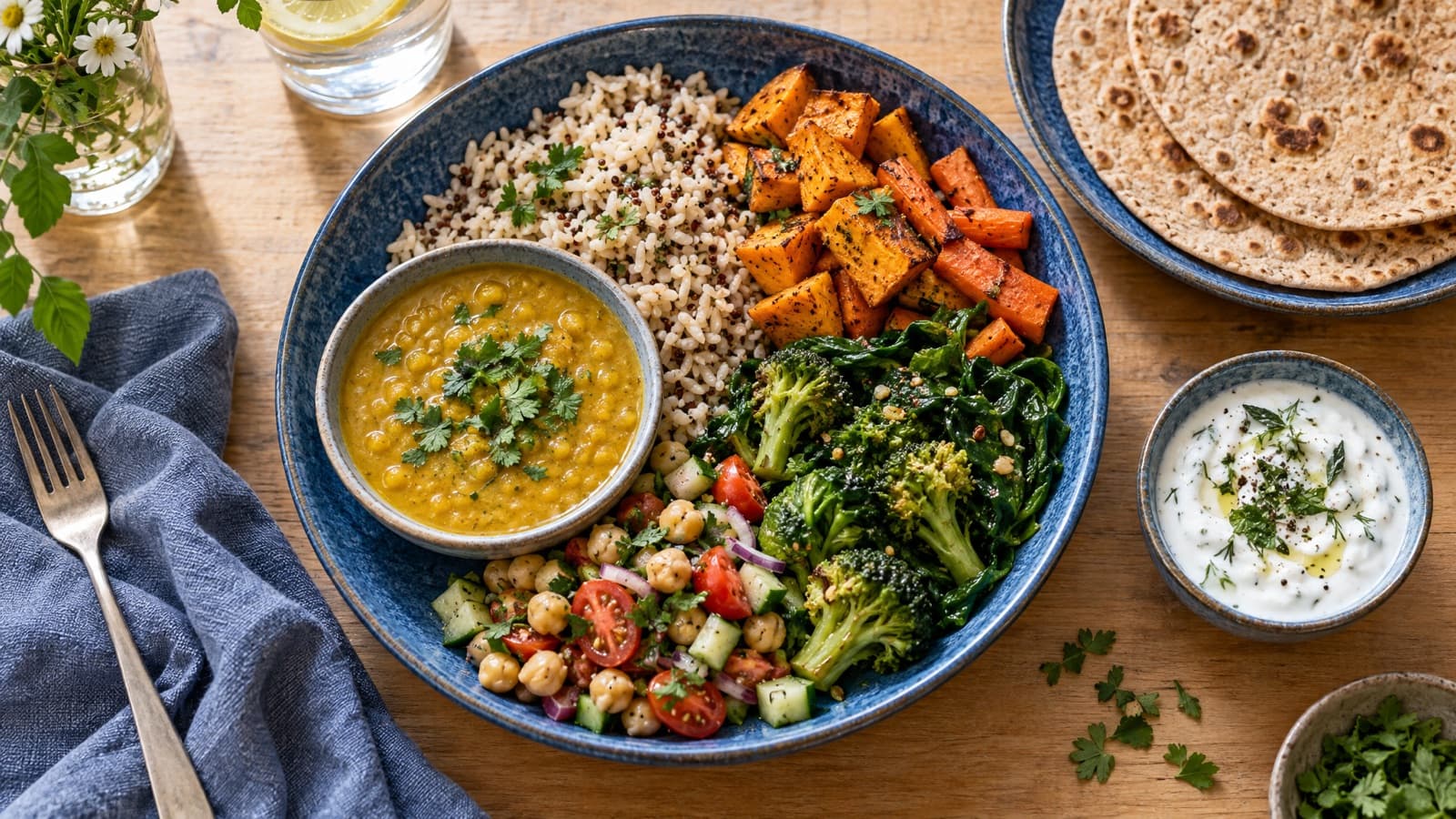
Choose a repeatable combination of vegetables, suitable protein and a portion of rice, roti or another carbohydrate that fits your needs. Dal, rajma, chana, tofu, yogurt, eggs or fish can support different preferences; a dietitian can adapt the approach for kidney disease, pregnancy or other conditions. Add achievable walking and strength activities, address sleep, and review medicines rather than relying only on a scale. [3]
Read our South and North Indian food guide or use the prediabetes check to organize questions. Tejas Clinic serves Frisco, Plano, Allen and McKinney residents. A weight-care visit can connect your goals with an individualized plan, without promising a particular weight or treatment.
Sources and editorial transparency
-
NICE NG246: Identifying and assessing overweight, obesity and central adiposity
-
American College of Cardiology: More Than Skin Color — Ethnicity-Specific BMI Cutoffs
Editorial series date: 2026-10-13. Originally prepared October 13, 2026; sources checked October 13, 2026. Original clinical content was not individually clinician-reviewed. Series dates organize this collection and do not claim earlier publication or evidence review. AI-assisted health education for Tejas Clinic; not individually clinician-reviewed or attributed to Dr. Raman. Linked sources describe the evidence and its limitations. This is not individualized medical advice. Illustrations are AI-generated and do not depict actual clinic patients or treatment outcomes.
This article is for educational purposes and does not replace individualized medical advice. Please discuss your personal situation with Dr. Raman at Tejas Clinic.